
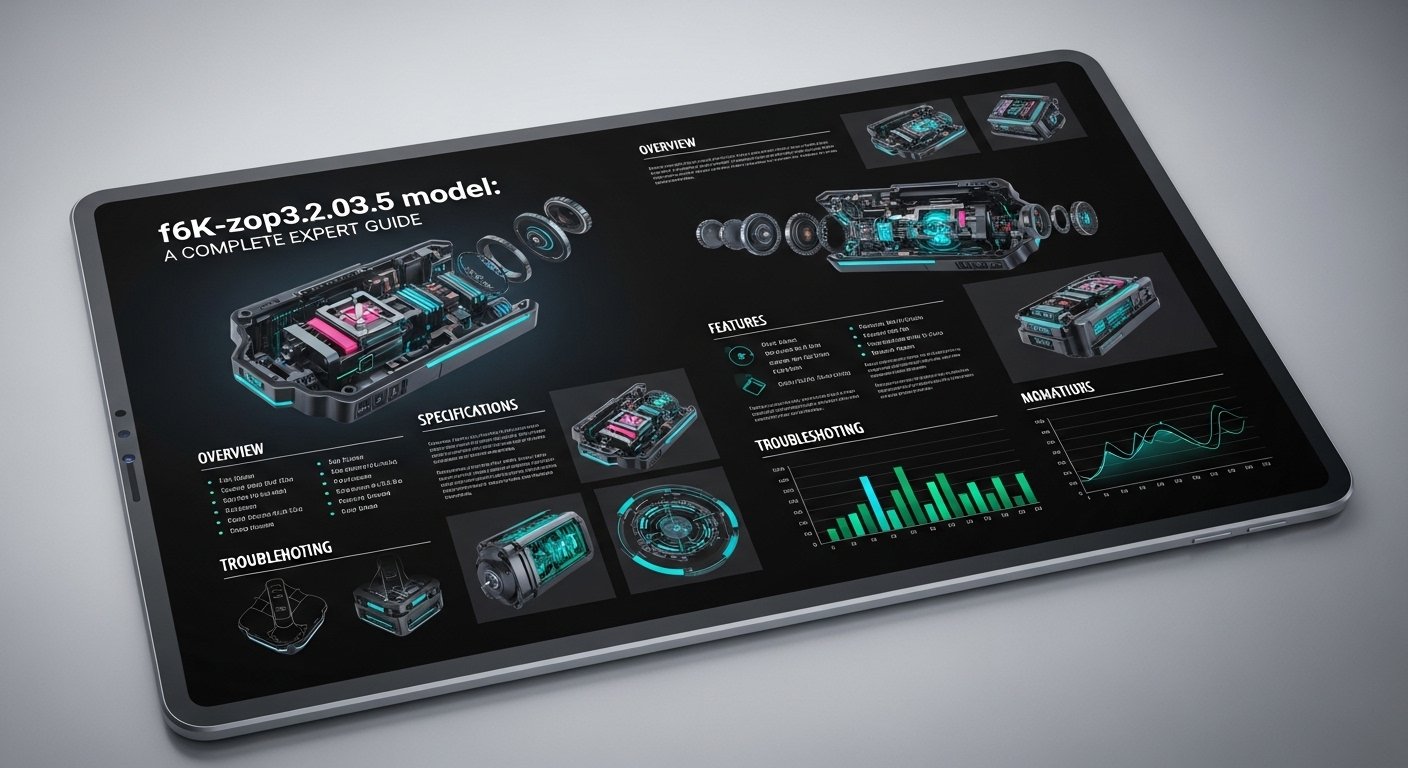
The f6k-zop3.2.03.5 model has recently gained attention across technical and industrial circles due to its adaptable architecture and performance-focused design. Whether used in advanced automation systems, data processing environments, or modular hardware frameworks, this model stands out for its efficiency, flexibility, and precision engineering. In this guide, we will break down its structure, functionality, practical applications, and long-term value—so you can clearly understand where it fits and why it matters.
Understanding the Core Design of the f6k-zop3.2.03.5 model
At its foundation, the f6k-zop3.2.03.5 model is built around a scalable framework. This means it can operate efficiently in both small-scale and enterprise-level environments without requiring a complete redesign. The modular configuration allows individual components to be upgraded or replaced independently, making long-term maintenance more cost-effective.
One of the most impressive features of the f6k-zop3.2.03.5 model is its adaptive processing layer. This layer automatically optimizes workload distribution based on system demand. Instead of relying on static configurations, the model dynamically adjusts performance metrics in real time. That reduces resource waste and improves overall operational stability.
Another defining element is its compact yet durable structural layout. The internal architecture supports high-speed data transfer while maintaining thermal balance. For environments where reliability is critical, this balance becomes essential.
Performance Capabilities and Technical Strength
When evaluating the f6k-zop3.2.03.5 model, performance is often the first factor examined. It delivers consistent output under variable conditions, which makes it highly dependable in fluctuating operational scenarios.
Processing Efficiency
The optimized internal circuitry ensures that the f6k-zop3.2.03.5 model minimizes latency while maximizing throughput. This efficiency makes it suitable for systems requiring quick response times, such as automated production units or advanced analytical frameworks.
Stability Under Load
Unlike many comparable systems, the f6k-zop3.2.03.5 model maintains structural and computational integrity under sustained heavy workloads. The built-in balancing mechanism prevents overheating and performance drops. This stability directly contributes to reduced downtime and improved operational continuity.
Energy Optimization
Energy management is another strength. The model’s design prioritizes low power consumption without sacrificing output capacity. Over time, this translates into lower operating costs and a smaller environmental footprint.
Practical Applications Across Industries
The versatility of the f6k-zop3.2.03.5 model allows it to be deployed in multiple sectors. Its adaptability is one of its strongest competitive advantages.
Industrial Automation
In manufacturing environments, the f6k-zop3.2.03.5 model supports synchronized operations across automated units. It can coordinate multiple subsystems simultaneously, ensuring smooth production cycles and reduced manual intervention.
Data-Driven Systems
In analytical or data-heavy infrastructures, the model enhances processing speed while maintaining accuracy. It supports large-scale information handling without compromising stability.
Integrated Control Systems
The f6k-zop3.2.03.5 model also performs well in integrated control networks. Its compatibility with diverse interfaces ensures seamless communication between connected components. This reduces configuration complexity and accelerates deployment timelines.
Key Advantages Over Comparable Models
Several factors differentiate the f6k-zop3.2.03.5 model from similar configurations in the market.
First, its modular upgrade pathway extends system lifespan. Instead of replacing the entire unit when performance needs increase, operators can upgrade specific modules.
Second, the reliability index remains high even under unpredictable usage patterns. This is especially valuable in mission-critical environments where failure is not an option.
Third, maintenance procedures are simplified. The internal layout allows easier access to core components, reducing service time and technical labor costs.
Implementation Considerations
Before integrating the f6k-zop3.2.03.5 model into an operational framework, it is important to evaluate compatibility requirements. While the model supports broad integration standards, ensuring alignment with existing infrastructure enhances performance outcomes.
Proper configuration during installation is essential. Although the system is adaptive, initial calibration allows the f6k-zop3.2.03.5 model to operate at peak efficiency from the beginning.
Training for technical staff also improves results. Understanding the model’s optimization features allows teams to maximize its full potential rather than using it at a basic level.
Long-Term Value and Scalability
Scalability is where the f6k-zop3.2.03.5 model truly excels. As operational demands grow, the system can expand without disrupting existing processes. This makes it suitable for organizations planning future growth.
Additionally, the model’s durable design ensures long service life. Reduced replacement frequency means lower capital expenditure over time. When evaluating total cost of ownership, the f6k-zop3.2.03.5 model consistently proves to be a strategic investment rather than a short-term solution.
Another long-term benefit lies in performance consistency. Systems that maintain stable output across years of operation deliver measurable financial and operational advantages.
Conclusion
The f6k-zop3.2.03.5 model represents a carefully engineered solution designed for adaptability, efficiency, and long-term reliability. From industrial automation to advanced data systems, its modular design and performance stability make it a strong choice for demanding environments. With scalable architecture, energy efficiency, and simplified maintenance, it offers both immediate operational benefits and sustainable long-term value. Organizations seeking a flexible yet dependable system will find the f6k-zop3.2.03.5 model a practical and forward-thinking option.